If you like this article, tell a friend!      
Showing posts with label Success. Show all posts

Wednesday, November 11, 2009

Secrets of success in 8 words, 3 minutes

Short and to the point - here's a good video about what it takes to succeed. I think while it may seem simple - I feel that each step could use a lot of focus to bring it to life.

Why do people succeed? Is it because they’re smart? Or are they just lucky? Neither. Analyst Richard St. John condenses years of interviews into an unmissable 3-minute slideshow on the real secrets of success.


Share/Save/Bookmark

Monday, April 20, 2009

Most Small-Business Owners Don't Plan to "Fully" Retire

Here's a relatively recent article I found from Gallup that goes back to my point that if you are doing what you love, you won't WANT to retire!

Source: http://www.gallup.com/poll/104866/Four-SmallBusiness-Owners-Dont-Plan-Retire.aspx

PRINCETON, NJ -- Only 11% of small-business owners say they plan to retire and stop working in their businesses in the long run, according to the Wells Fargo/Gallup Small Business Index survey.

Declining and Delaying Retirement

Nine in 10 small-business owners say they are satisfied with being small-business owners -- 21% are extremely satisfied, 37% very satisfied, and 31% somewhat satisfied. Perhaps most indicative of their contentment, 83% say they would do it again and become small-business owners instead of doing something else. In other words, small-business owners overwhelmingly like what they do.

Because small-business owners like their work and have the option to continue working past retirement, it may not be surprising that 40% say they will continue to work as long as their health allows them to do so -- essentially the same as the 38% who felt this way in 2005. Another 47% say they eventually plan to cut back on the work they do but maintain their involvement in their businesses -- up from 42% in 2005. The percentage of small-business owners actually planning to retire and stop working in their businesses fell from 19% in 2005 to 11% in the most recent survey.

Thirty-eight percent of small-business owners say they will retire or cut back on their work at a different time than they had originally planned. Six in 10 of these owners say they will retire later than planned and many of those delaying retirement will do so for financial reasons. Sixty-two percent of small-business owners say they expect their small businesses to keep going after they stop working, while one in three feel their businesses will stop -- essentially the same as in 2005.

A Good Time to Have Retirement Flexibility

An April 2007 Gallup Poll showed that only 53% of Americans thought they would have enough money to live comfortably when they retire. Obviously, current economic conditions are even less conducive to retirement than they were last year, given declining housing prices, a weak stock market, low interest rates on most safe forms of savings and investment, and surging food and energy prices. As a result, it is not surprising that earlier this year, 45% of Americans said they were worried that they would have to retire at a later age than they had originally planned.

In the Wells Fargo/Gallup Small Business Index survey of last October, a much higher 79% of small-business owners said they thought they would have enough money to live comfortably in retirement. In part, this may be because small-business owners tend to have higher incomes than the average American. More importantly, however, small-business owners also have more flexibility than the average American in deciding whether and when they will retire.

This ability to time one's retirement may be of even more importance in the months ahead. Last Friday's Bureau of Labor Statistics report showing another drop in U.S. jobs makes it obvious that the U.S. economy is now experiencing a recession. During such an economic downturn, many companies lay off employees and encourage early retirement as their business slows. As a result, many Americans may soon be more worried -- not that they will have to work to a later age than they had hoped, but that they will have to retire earlier than they desire and with far fewer resources than they had hoped.

Survey Methods

Results for the total dataset are based on telephone interviews with 600 small-business owners, conducted Oct. 4-14, 2007. For results based on the total sample of small-business owners, one can say with 95% confidence that the maximum margin of sampling error is ± 4 percentage points. The margins of error for subgroups will be slightly larger.

Other results are based on telephone interviews with 1,008 national adults, conducted April 2-5, 2007. For results based on this sample, the maximum margin of sampling error is ±3 percentage points.

In addition to sampling error, question wording and practical difficulties in conducting surveys can introduce error or bias into the findings of public opinion polls.


Share/Save/Bookmark

Friday, March 27, 2009

Most Small Business Owners Feel Successful

Below is a great article from Gallup that I thought was very motivating from the GALLUP NEWS SERVICE.

source: http://www.gallup.com/poll/24103/Most-Small-Business-Owners-Feel-Successful.aspx

PRINCETON, NJ -- Today's economic environment is extremely challenging for small business owners given surging gas prices at the pump and more than two years of interest rate increases. Despite all the difficulties facing the nation's small business owners, however, most feel successful and given the choice, say they would do it over again according to the most recent Wells Fargo/Gallup Small Business Index poll. Most also say being a small business owner has made them better off financially.

Most Feel Successful

Nine in 10 small business owners say they feel successful. In fact, 47% feel extremely successful (8%) or very successful (39%). Nearly half (45%) feel somewhat successful while only 6% feel not too successful and just 1% feel not at all successful.


Eighty-seven percent of small business owners also say they are satisfied being a small business owner, with just 12% saying they are not.


Most Would Do It Again
What if small business owners were given another chance to choose between being a small business owners and doing something else? Eighty-three percent say they would do it over again and choose to be a small business owner.


Most Say They Are Financially Better Off

Three in four small business owners say they are better off financially being a small business owner than they would be working for some other company. However, just about half feel they make more money per hour as a small business owner than they would as an employee of another company.


A Passion for the Job
Being a small business owner clearly has many rewards. Even during challenging times, most small business owners would do it again. Still, this survey and previous Wells Fargo/Gallup Small Business Index surveys suggest small business owners must have a passion for what they do. They find themselves working many hours and discover working hard becomes an essential part of their work-life balance.

Survey Methods

Results for the Wells Fargo/Gallup Small Business Index poll are based on telephone interviews with 602 small business owners conducted May 22-June 9, 2006. For results based on the total sample of investors, one can say with 95% confidence that the maximum margin of sampling error is ±4 percentage points.


Share/Save/Bookmark

Saturday, March 21, 2009

Small business owners would do it all again

It's hard to find data on entrepreneurship - so while this data from Gallup is a bit outdated - I believe that the sentiment is the same...

Source: http://www.gallup.com/poll/9586/Would-Small-Business-Owners-All-Again.aspx

Anyone who has run a small business knows that it can be a
challenging way to make a living. Small-business owners wear many
different hats. They typically have little leeway with regard to
pricing -- they're usually price-takers on the buy-side with
no ability to leverage their suppliers, and price-givers on
the sell-side with no ability to leverage their customers. The
government generally makes the whole situation worse, forcing small
business owners to deal with enormous regulatory burdens and
paperwork that was designed with much larger companies in mind.

Given these day-to-day challenges and the relatively poor
business environment of the past few years, it probably wouldn't be
too surprising to find that many of the nation's small business
owners are discouraged and wish they had done something else with
their lives. However, just the opposite is true, according to the
new Wells Fargo/Gallup Small Business Index survey* (see "Small
Businesses Offer Hope for Job Creation" for more on this new
Index).

Small Business Owner Satisfaction

More than 8 in 10 of the nation's small business owners say they
are satisfied with being a small business owner. More than half
(56%) are very or extremely satisfied, and 30% are somewhat
satisfied. Only 13% say they are not too satisfied or not at all
satisfied.

"http://media.gallup.com/GPTB/finanComme/20031028_1.gif" width=
"440" alt="" border="0">

Small Business Owner Success

Nearly all small business owners feel that they are at least
somewhat successful at what they do. Forty-one percent feel that
they are very or extremely successful at being a small business
owner. Another 56% say they feel somewhat successful, while only 3%
say they feel they are not too successful or not at all
successful.

"http://media.gallup.com/GPTB/finanComme/20031028_2.gif" width=
"440" alt="" border="0">

Better Off Financially?

Three-fourths of small business owners say they are better off
financially than they would be working for some other company in
the same field.

"http://media.gallup.com/GPTB/finanComme/20031028_3.gif" width=
"440" alt="" border="0">

Although the majority of small business owners feel that they
are better off financially than they would be otherwise, they also
recognize that they usually work considerably more hours than
employees of other companies do. Do small business owners feel
they're better off financially simply because they work so many
hours?

On this question, small business owners are more evenly divided
-- about half of the nation's small business owners (48%) feel that
they earn more per hour in their business than they would earn as
an employee of another company. Thirty-six percent say they earn
less per hour, and 14% say they earn about the same.

"http://media.gallup.com/GPTB/finanComme/20031028_4.gif" width=
"440" alt="" border="0">

Do It Again?

Despite the poor economic conditions of the past several years
and the inherent challenges they face, small business owners are
not only satisfied with their occupation, but almost uniformly feel
successful. Add to this that most feel they are better off
financially than they would be otherwise, and it is not surprising
that 81% of the nation's small business owners say they would
become small business owners again instead of doing something else.
Nor is it unreasonable to expect public policy-makers to do more to
build on this success, by more aggressively encouraging Americans
to become small business owners.

"http://media.gallup.com/GPTB/finanComme/20031028_5.gif" width=
"440" alt="" border="0">

*The new Wells Fargo/Gallup Small Business Index is not based
on a survey of the bank's small business customers. Instead, it is
based on a nationally representative random survey of small
business owners from across the United States. For this initial
baseline survey report, Gallup conducted telephone interviews with
591 small business owners (having $20 million or less in annual
sales) over the period of Aug. 5 to Aug. 20, 2003. For results
based on this total sample of small business owners, one can say
with 95% confidence that the margin of error is ±4
percentage points.


Share/Save/Bookmark

Monday, March 16, 2009

Entrepreneurs don't need to retire?

Here's another great article from the Gallup poll that I believe is still relevant. Many Americans working in the corporate world are counting the days until they can retire. But what if you were your won boss and doing something you love? Then you basically don't need to retire...

Source: http://www.gallup.com/poll/20626/Many-SmallBusiness-Owners-Will-Work-Until-They-Drop.aspx

Among the advantages of being a small-business owner is the ability to decide for yourself how you'll handle your retirement. While many younger Americans may look forward to retirement as a time to stop working, as people grow older they often begin to see retirement simply as a change in lifestyle -- not a time to sit on the beach and cease being productive.

A recent Wells Fargo/Gallup Small Business Index survey* shows that fewer than one in five small-business owners plan to stop working and retire over the long term. While nearly two in three expect their businesses to keep going after they stop working, only two in five of these people think a family member will take over and run their businesses in the future. For many small-business owners, then, the sale of their business is clearly a significant potential source of retirement assets.

Most Owners Plan to Stay Involved

In the long run, 42% of small-business owners say they plan to cut back on work but maintain involvement in their businesses. Thirty-eight percent say they will never retire until forced to do so for health reasons. Just 19% say they expect to retire and stop working.

Most Owners Expect Their Businesses to Keep Going

Sixty-three percent of small-business owners say they expect their businesses to keep going after they are no longer working, while 34% say their businesses will come to a stop.

Most Owners Say Their Businesses Will Be Sold

Of those small-business owners who expect their businesses to continue after they stop working, only 41% think someone in their families will keep it going. Twenty-one percent of small-business owners expect to sell the business to someone or a group of people currently working for it. One in three expect to sell it to someone or a group of people outside the business.

Why Should Small-Business Owners "Retire"?

Ninety-six percent of small-business owners say they are successful, 91% say they are satisfied being small-business owners, and 84% say if they had to do it all over again, they would still become small-business owners. In sum, many small-business owners love what they do and have been successful at turning something they enjoy doing into a good living.

So is it really surprising that they don't want to stop working and retire? As they get older, it makes sense that these owners will slow down and work fewer hours but stay involved in the business they enjoy. It also makes sense that they'll stop working altogether only when forced to do so for health reasons.

In this regard, it's interesting to note that many other Americans who do not own their own businesses dream of "retirement" as a time when they can start their own small business by converting their hobby or something else they love to do into something that will allow them to maintain their desired lifestyle in retirement. Obviously, many of today's small-business owners are a step ahead in achieving this kind of "retirement" goal.

*Results for the total dataset are based on telephone interviews with 600 small-business owners, conducted Sept. 26-Oct. 6, 2005. For results based on the sample, one can say with 95% confidence that the maximum margin of sampling error is ±4 percentage points.


Share/Save/Bookmark

Thursday, March 5, 2009

It's risky NOT to be an entrepreneur

Everyone talks about how risky entrepreneurship is - and if you just take a blind leap it can be. But as you have seen from our postings here at the Corporatepreneur we don't think entrepreneurship has to be risky. In fact with a solid plan it can significantly decrease the risks and stresses in your life.

i believe starting a business on the side while still working a full-time job is a safe way to go. Please be conscious of any COI's (conflicts of interest) or other issues with you current job, but as long as you aren't competing with your employer either for your time or customers - you should be fine. And then you can keep that steady paycheck while growing something on the side.

Here are the risks of NOT trying to start your own business with some articles from some of my other favorite entrepreneur blogs.

1) You could become "that guy" or "that gal"
2) Your corporate job isn't secure anyway
3) You risk not living up to your TRUE potential!

I think the Corporatepreneur approach offers the not only the safest way to start a business - but the safest way to live your life. You keep doing what you are doing with the upside of finding your own entrepreneurial niche!


Share/Save/Bookmark

Monday, March 2, 2009

The Wealthiest Americans are Business Owners

The TaxFoundation.org puts a summary together of individual income tax payers. I kept this one from a few years back because I thought the comment they had on business owners was important. Basically if you really want to be rich - start a business!

Source: TaxFoundation.org

Over the past 25 years, the number of taxpayers reporting business activity on their individual tax returns has grown at an exceptionally rapid rate. Between 1980 and 2004, as shown in Chart #7, the total number of sole proprietorships, partnerships, farms, and S-Corporations more than doubled, from 13.3 million in 1980 to 27.5 million in 2004.


S-Corporations alone grew almost seven-fold, from 545,389 in 1980 to roughly 3.5 million in 2004, and they now far exceed the number of conventional C-Corporations. When we look carefully at the distribution of these tax returns, a clear picture emerges: an extraordinarily high proportion of high-income taxpayers have some form of business income (schedule C, E, or F) and as their incomes rise, so too does the likelihood that they have business activity.


Overall, as is shown in Chart #8, 43 percent of taxpayers in the top 20 percent have business income, twice the percentage of those in the middle income group. Of those taxpayers in the top 1 percent – those earning more than $300,000 and subject to the highest marginal tax rates – nearly three quarters have business income. And for taxpayers with incomes above $1 million per year, nearly 83 percent have business income.


Remarkably, because so many taxpayers now have business income (or are paying their business’s taxes through their individual tax form), Tax Foundation economists estimate that taxpayers with business income paid 54.3 percent of all individual income taxes in 2004.


What this means is that calls to shift the tax burden even further up the income scale will, in fact, end up penalizing business owners and entrepreneurs, endangering our long-term economic vitality.

Here's my take on the data - if you work hard as an employee you can make $100,000 - $200,000 per year. BUT if you want to make $500,000 or more in a year, you probably have to be either a sports athelete or a business owner.


Share/Save/Bookmark

Thursday, February 19, 2009

The Paradox of Replacement Income

What is one of the first things you said when you started thinking about starting your own business? I am going to guess one of them was along the lines of "if only I could make as much money as I do in my [insert boring corporate job title] by starting my own business - I'd quit this [insert boring corporate job title] today!"

This theme is quite common and quite understandable. And hey - if you could instantly replace your corporate income by working for yourself and doing something you love - who wouldn't?

But - as you probably know by now - there are no "get rich quick" co-outs here on the Corporatepreneur Blog. And making money in your own business takes time. We know - we are 8 years into the Corporatepreneur world and it took us 6 years of running our own business before our business generated enough income to match that of our full-time corporate jobs. But then what? Did we quit working in the corporate world and start living the high life? No. And here's the surprising tale of how it may be likely that you would make the same decision to stay at your corporate job too.

Let's assume that you are planning to start your business in 2010. And just for conversation, let's say you are making $50,000 in your day job and get a 4% raise per year. Below is a graph depicting a 10 year time horizon for your side business income to become equal to that of your corporate job (at that time).


Not too bad right? In 10 years time you have made a substantial amount of money from your side business and it now equals your corporate income.

I first want to assure you that such a scenario is possible - I don't think it is an exaggerated "get rich quick" scenario but I do think it is a life changing situation not only financially but emotionally and in many ways spiritually (but that is for another blog).

So what's the problem? Well - in this hypothetical example - you now make enough money working for yourself that you could replace your corporate income and quit your full-time job for that crappy boss. Well - not so fast! Because this is a gradual process (it's really not because look how much faster your business income grew compared to a fair market salary increase in the corporate world - but that's what entrepreneurship is all about) - and it take 10 years for your incomes to be equal - you have now grown accustom to a lifestyle of making 1.5-2.0 times your corporate income alone. Maybe you have bought a new car or your wife has decided to stay home with the children as a result of this new side business windfall. Or maybe you have become an avid saver for retirement.

Whatever the reason - my caution is this - when you start out wishing you could just replace your corporate income with a side business you may find out that there really isn't a good time to take a 50% pay cut (reduce your income by half).

And this my friends - is one of the awkward stages of being a Corporatepreneur that this blog is all about. These are real life situations that anyone of us would love to have as a "problem" when we start out - but become a real challenge years into starting your own business.

I have been excited to write this blog because when it happened to me it took me by surprise - did it surprise you? Let us know by posting a comment.

PS - The income scenario above has been watered down. Below is a more "realistic" example of how your income might grow in a side business over 10 years. As you can see in the entrepreneurial world the financial gains can be as big as the variability. Entrepreneurs are not on a "pay scale" and often the growth of your business is unpredictable. It doesn't follow a nice curve! In fact - there is no guarantee that you will make the same amount year to year - making the leap to working for yourself full-time a challenge.


Share/Save/Bookmark

Sunday, January 18, 2009

Long hours for Small Business Owners

Here is another oldie but a goodie from the Gallup poll about Entrepreneurs. I think the message is "Hard work pays off"...

Source: http://www.gallup.com/poll/18088/Work-Labor-Love-SmallBusiness-Owners.aspx

What does it take to start your own business? Entrepreneurial spirit is an obvious requirement, but it takes much more than that, according to a new Wells Fargo/Gallup Small Business Index survey*. Most small-business owners have a passion for their work, which leads them to work long hours most days of the week. As a result, small-business owners tend to see passion for their work as a natural part of their work-life balance.

Small-Business Owners Work Long Hours

Fifty-seven percent of small-business owners say they work six or more days each week. In sharp contrast, only 7% say they work fewer than five days each week.

Sixty-two percent of small-business owners say they work 50 or more hours each week. On average, small-business owners put in 52 hours each week.

Do Small-Business Owners Ever Relax?

On average, small-business owners say they take about two weeks of vacation each year. Six in 10 say they just enjoyed their last vacation, and didn't do anything work-related. Of the 39% of small-business owners who did work while on their last vacation, 8 in 10 (81%) say they made or returned business calls, and half (52%) initiated or returned e-mail.

Two in three small-business owners (67%) are satisfied with their ability to achieve a positive work-life balance. And a similar percentage (65%) feel they are able to make the time available outside work to do the things that are most important to them.

Being a Successful Small-Business Owner

Ninety-four percent of small-business owners say they are at least somewhat successful, 87% say they are at least somewhat satisfied with being small-business owners, and 84% say they would still become small-business owners if they had to do it all over again. However, becoming a successful small-business owner asks a lot of the individual and his or her family.

Given the long hours, being a small-business owner is not a 9-to-5 job. In order for small-business owners to achieve a positive work-life balance, their families must be willing to find ways to make work a part of their family life -- hence the fact that many small businesses are also "family businesses."

*Results for the total dataset are based on telephone interviews with 607 small-business owners, conducted June 10-24, 2005. For results based on the total dataset, one can say with 95% confidence that the margin of sampling error is ±4 percentage points.


Share/Save/Bookmark

Wednesday, January 7, 2009

Building a business is a long term process

Would you like to make a six-figure a year (or better) income while you sleep, take a vacation, or work from home? Who wouldn't. Whenever I tell people about running an internet business they all wish they had a rack of servers somewhere practically printing money. But having gone through the 8 year process - I know why so few people are doing what we are doing - because they don't want to put in the upfront time to make it happen.

How can this be? Most people are working 40 hour weeks for less than half of that pay and have to put up with a crappy boss and depression. Well... the road to being a successful business owner is long and hard.

I remember starting a business in late 2000 right after the dot com bubble burst. We would work full days in the corporate world, then meet at an apartment with out laptops and crank out code for website ideas. This involved working everyday after work (often napping on the floor) and working most weekends, and as young single bachelors we did this for about 18 months before we ever paid ourselves a dime. In January 2002 we finally paid ourselves for this hard work - and of course over time the work was less and less business start up and more maintenance and growth. Now 8 years later we have very little business maintenance and focus almost solely on how to grow our business (no easy feat in these crazy economic times). The monthly income grew as well - though it was never really predictable. Ad rates, customer spending, competition - they never stop moving all over the map.

What I love most about being an entrepreneur is that I don't even feel that successful, we are still very small fish and our businesses aren't publicly well known - but that's also the great thing - you can be a wealthy anonymous person. Not everyone will invent the next google.

But the success and wealth at the end of 8 years of work often doesn't seem to justify all the hard work. In fact if I knew going in how much work we would do I'm not sure I would have signed up for it - though I also probably didn't know how much I would enjoy the business process and struggles. Anytime you are working for yourself you feel much better about having to do the grunt work because you directly benefit from your hard work.

I just love this post by Adam McFarland where he puts together a timeline of his entrepreneurial success. Be sure to poke around his blog because it is a great "real life" example of entrepreneurship.

As I am sure you know by now we believe in these real stories of business start ups and ignore the "get rich quick" schemes you see on TV. In our opinion - that's not what REAL entrepreneurship is all about.


Share/Save/Bookmark

Saturday, January 3, 2009

Perfection is enemy

One thing that prevents people from going from the "thinking about it" stage to the "doing something about it" stage is fear that their idea isn't perfect yet. Well I found a great post on the blog A Smart Bear: Startups + Marketing + Geekery blog. Moral of the story is the title: Your idea sucks, do it anyway... it's better to do something, fail, and learn about than it is to not do anything at all... sometimes you end up being wildly successful at something not directly related to what you started.


Share/Save/Bookmark

Tuesday, December 23, 2008

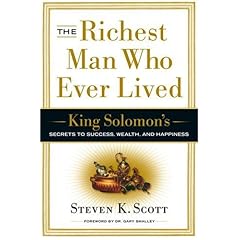
5 Secrets to Success, Wealth, and Happiness

One man's road to Success, wealth and happiness was created by studying the Book of Proverbs, the proverbs of King Solomon (who knew). Anyways instead of a book review (I'll skip the part about how this guy makes his millions) I thought I'd save you some time and give you the gist of the book.

So here are the 5 Secrets to Success, Wealth, and Happiness. I have expanded upon the 1st two in detail because they really stuck out to me.

"Secret" #1 - Be Diligent
This Author states that it is pretty much human nature to take the path of least resistance, to do the minimum, and to just get by. He argues that in order for people to aspire to be more, all the success, wealth and happiness in the world is reserved as a reward for being diligent versus lazy.

He states that being diligent is to be:
a) Persistent towards your goal or in refining your craft (not in a stubborn way but with an openness to continuing to alter your course when needed to overcome obstacles).
b) Hard working
c) Well planned
d) Perform with speed, efficiency, and excellence so you will be sought out for your work.

The rewards of this diligence are:
i) True fulfillment without the want or need of material possessions
ii) Respect and admiration from society for your work
iii) Satisfaction and success
iv) Great wealth (everyone is happy to pay someone who does great work)

The author states that pretty much by being lazy you can assure yourself of having the opposite of each of the things above.

Most interesting was his beliefs around the root causes of laziness:
1) Self-centeredness - those who are open see the world around them will find an abundance of opportunity to make a difference with their own unique skills
2) Conceit or arrogance - those who are humble will be open to learn much from the world around them. Those who are arrogant know it all already and continue to takes the actions they want to take without improvement in approach or aspiration.
3) Ignorance and Irresponsibility (Foolishness) - The ignorant act without regard to the consequence of their actions. It is easier to be ignorant than to be educated because it takes time and effort to become something.

I won't be able to comment in as much detail as I would like on each of these without losing some readers, but this is one of two that I will comment on. At times I think you can go through the motions and do just enough to get by in this world because you haven't spent the time or the soul-searching effort to decide what you want to do. If you are going to do or study something, do it as best you can. If you are half-assing it - then you probably don't know what you want to do (or you may know it's not to become that which you are studying to become) so do something else.

"Secret" #2 - Eliminate Your Sense of Entitlement
A sense of Entitlement in any area of your life is an enemy that will keep you bound to unhappiness. This author argues that you will continuously be looking to others with unrealistic expectations and no control over what they actually are willing to give you. The only way to break loose of this unhappy and bitter cycle of entitlement is to release all unrealistic expectations you may have of others, including the government, your spouse, your employer, friends and your relatives.

This is the other topic I feel compelled to comment on. After spending 2 years studying Gen-Y (also known as generation debt) I have talked with many teenagers and people in their early twenties and I have seen this first hand. I am not sure what compels people to constantly keep score of what others owe them without thinking about what they have contributed in order to justify their "ransom". And too often you will find that the people who feel they are entitled to something are those who are desperate for that hand-out because they do not give enough of themselves to earn it. Once these people figure out how to earn what it is they desire (money, respect, etc) they will quickly break free of the chains of relying on others as they figure out how to rely on themselves.

In a business context the story goes as follows. Most people don't know how to make money. They don't know what they should do to have someone offer them compensation, so they look to an employer to tell them what to to to generate money for the company, and the company gladly gives them a wage which will be less than their output for the company. One famous business quote is that all of the enormous profits of the Fortune 500 companies are from excess output of the employees that they are not being paid fairly for. Once you learn how to earn money (or create money) without needing a company to tell you what to do, you will have "job security" for the rest of your life because you will always be able to rely an yourself versus needing a job from someone else.

But quickly back to the Gen-Yers. The sense of entitlement is alive and well as many people just starting out and working full time believe their standard of living should be as high as is was when living at home with mom and dad. They forget that it took their parents 20+ years to get to that level in their lives. This is a rude awakening for many Gen-Yers and a big reason why they prefer to live at home with their parents until they can save up for a higher starting standard of living. I still support Gen-Yers who chose to live at home with their parents because I think it is more responsible than starting out buying a home or a new car too soon while living lavishly. Far too many Gen-Yers start out with enormous college debt to let alone then add to their debt by spending beyond their means with no thoughts of saving for the future or retirement.

This section really struck me as I feel our nation becoming more of an entitlement nation than a boot-strapping nation of hard-working achievers which I believe is what built this nation.

"Secret" #3 - Be Grateful
If you are not grateful, DEVELOP a grateful heart. We all start with different levels of difficult situations in our lives, so this Author recommends if you currently don't feel that grateful, "treasure hunt" for things in your life that you could be grateful for already. In addition to warming you heart and those around you, you will begin to see joy in your life that is consistent, persistent, and lasting.

"Secret" #4 - Root out the weeds of Envy
Envy is a bottomless pit with no end. It is in opposition to feeling fulfilled. Envy is a misbelief that the things others have makes them happy or would make you happy. I think research has shown that by achieving a new level of possessions, we quickly recalibrate and would then desire what's next. When you know what you want in life, you can then know when enough is enough for you. Until you do that soul-searching, you will envy out of fear because you don't know enough about yourself to measure when you will have enough and be fulfilled.

"Secret" #5 - Live Wisely
The author states that Wisdom is not just about knowing what is right but acting on it. Living wisely involves DOING the right things, for yourself and for other around you. It is not enough to say "I know I should appreciate the people in my life" if you are actually being cold or bitter. It is an emptiness inside that fosters an external chill. Probably everyone knows someone who is curt or rude, and I also believe most people know that those people aren't happy with themselves more than they are unhappy with the masses they aim to irritate. Wisdom is about continual learning and self-improvement, and then putting those learnings into action. My takeaway from this point is not to just talk the talk but walk the walk. Another point that comes to mind with the live wisely point is that inner peace is not enough. I think everyone must then work to spread that peace.

So that's my long-winded summary. If you made it to the end congratulations. By no means do I pretend to be an expert on any of this, but I can now say that this book has brought it more top of mind as something I strive to be conscious of. And now - hopefully you will too because then in some small and indirect way maybe I can pass along some success, wealth and happiness to your life. That is your reward for being diligent enough to finish this blog!


Share/Save/Bookmark

The Corporatepreneur © 2008. Template by Dicas Blogger.

TOPO